Vestwell Savings Report: What Employees Are Asking for From Their Workplace Benefits

Want to get the highest possible return on your benefits spend? It might not mean launching more benefits, adding extra incentives, or sending more enrollment reminder emails.
New research shows that your ROI can come down to whether employees can actually find their benefits, understand them, and know what to do with them once they're available.
Vestwell's 2026 Saver Survey of 1,000+ working Americans found that friction is what's keeping employees from using benefits already in place. We've broken down two of the report's key findings: why benefits go unused, and what employees are asking for instead.
Why Workers Might Not Be Using the Benefits They Already Have
When survey respondents who had delayed or ignored an employer financial benefit were asked why, the answers pointed to friction, not disinterest:
- 16% didn't know the benefit was available.
- 10% didn't think they could afford it.
- 10% didn't understand how it worked.
- 6% said getting started simply felt too complicated.
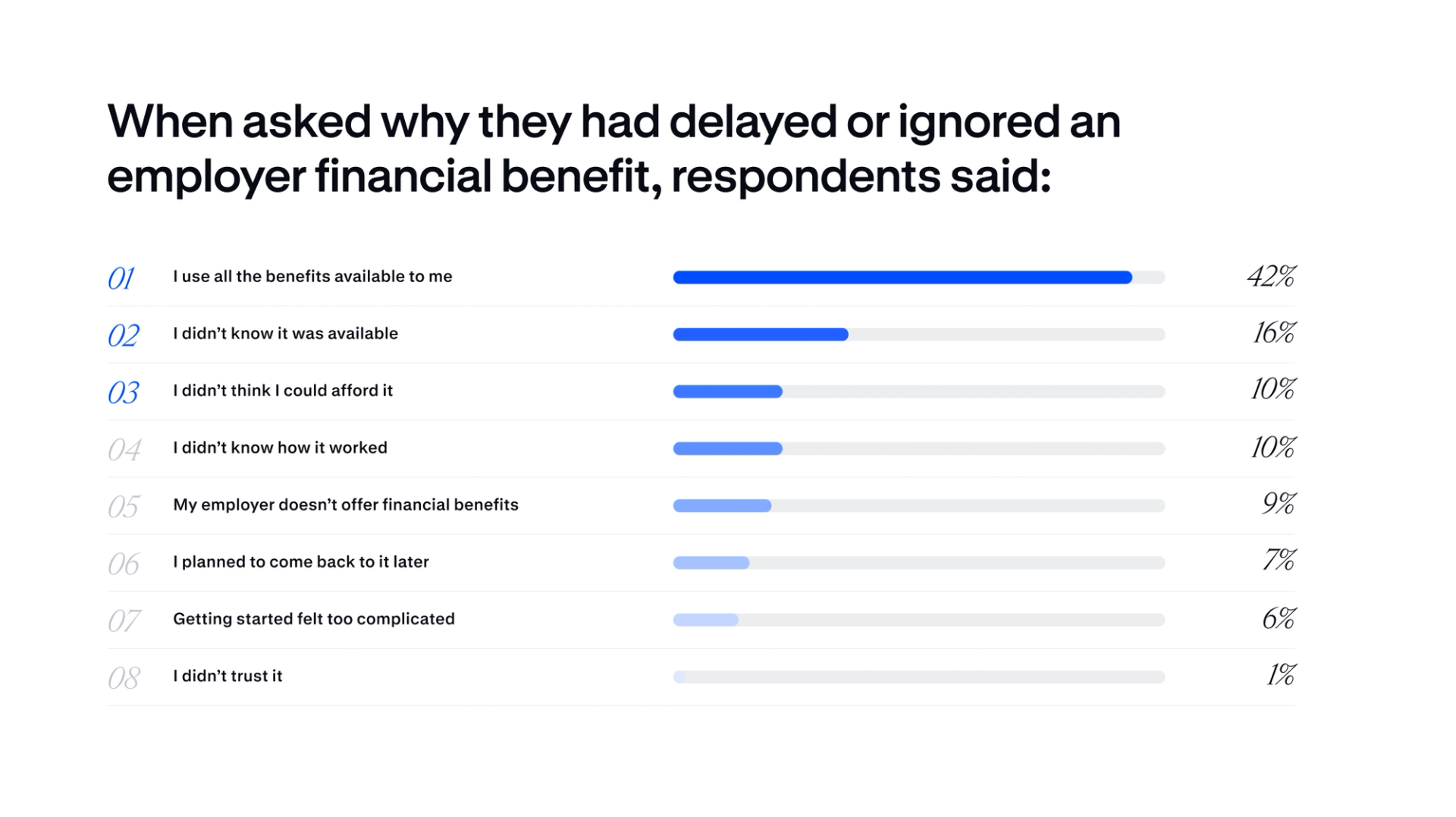
Of the employees who don't use every benefit available to them, 54% cited one of these barriers as the reason, meaning friction is the reason for more than half of the benefits going unused, not lack of interest.
The Cost of Unused Benefits for Employees
The consequences of that friction show up directly in employees' long-term savings and financial outcomes. A worker who doesn't know their emergency savings account exists is missing a key way to build a financial cushion that protects their retirement savings. A worker who never enrolled in their 401(k) is leaving their employer’s match on the table. These missed opportunities can compound into a noticeable gap in both short- and long-term financial security.
The Cost of Unused Benefits for Employers
Employers offer benefits to attract talent, retain it, ease financial stress, and build a stronger workplace culture. Unused benefits mean an unrealized return on all of those goals.
In fact, 73% of financially stressed employees say they would be attracted to another employer that cares more about their financial well-being, compared to just 54% of employees who aren't financially stressed. That advantage only holds if employees actually engage with what's offered. A benefit that goes unused fails to deliver the recruiting and retention edge it was meant to create.
What Employees Are Asking for Instead
So what can close that gap? The short answer is automation and personalization.
The survey asked respondents to imagine a tool that automatically directed each dollar from their paycheck to the financial goal where it would have the biggest impact, whether that's building emergency savings first, paying down high-interest debt, or maxing out their 401(k) match. The response: 68% said the concept would be very or extremely valuable.
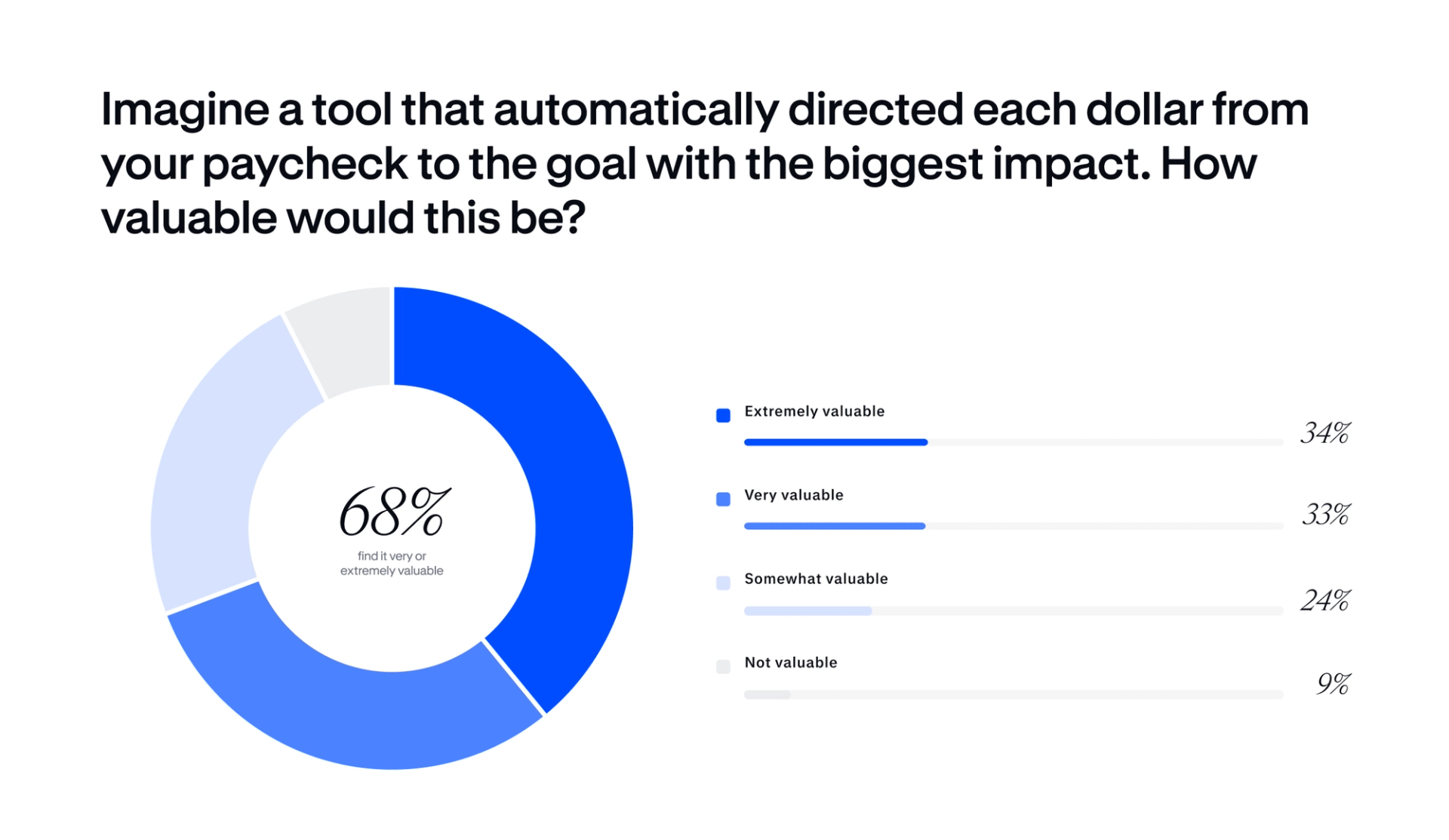
That demand isn't limited to employees who are feeling behind:
- 84% of workers who describe themselves as not very confident in their financial decisions say the tool would be very or extremely valuable.
- 94% of workers who say they don't know where to start say the same.
- 41% of respondents in their 20s called the tool extremely valuable.
- Roughly 7 in 10 workers in their 20s, 40s, and 50s rated it very or extremely valuable, showing interest across a range of age levels.
The personalization data tells the same story. When asked what a financial wellness platform should use to tailor its recommendations, 24% of respondents said paycheck and spending, second only to age and life stage at 33%. Employees are asking for guidance that starts where their money actually is, at the paycheck level, at the moment a decision needs to be made.
Even the Most Expected Benefit Isn't Enough on Its Own
It's easy to assume a strong 401(k) covers most of this ground already, but it doesn't. Ninety percent of respondents said a 401(k) is essential or very important. That number has held steady across age, income, and employer size.
But that expectation has become table stakes rather than a source of guidance: 61% of workers describe it as a baseline benefit they simply expect, not something that helps them figure out what to do with the rest of their paycheck.
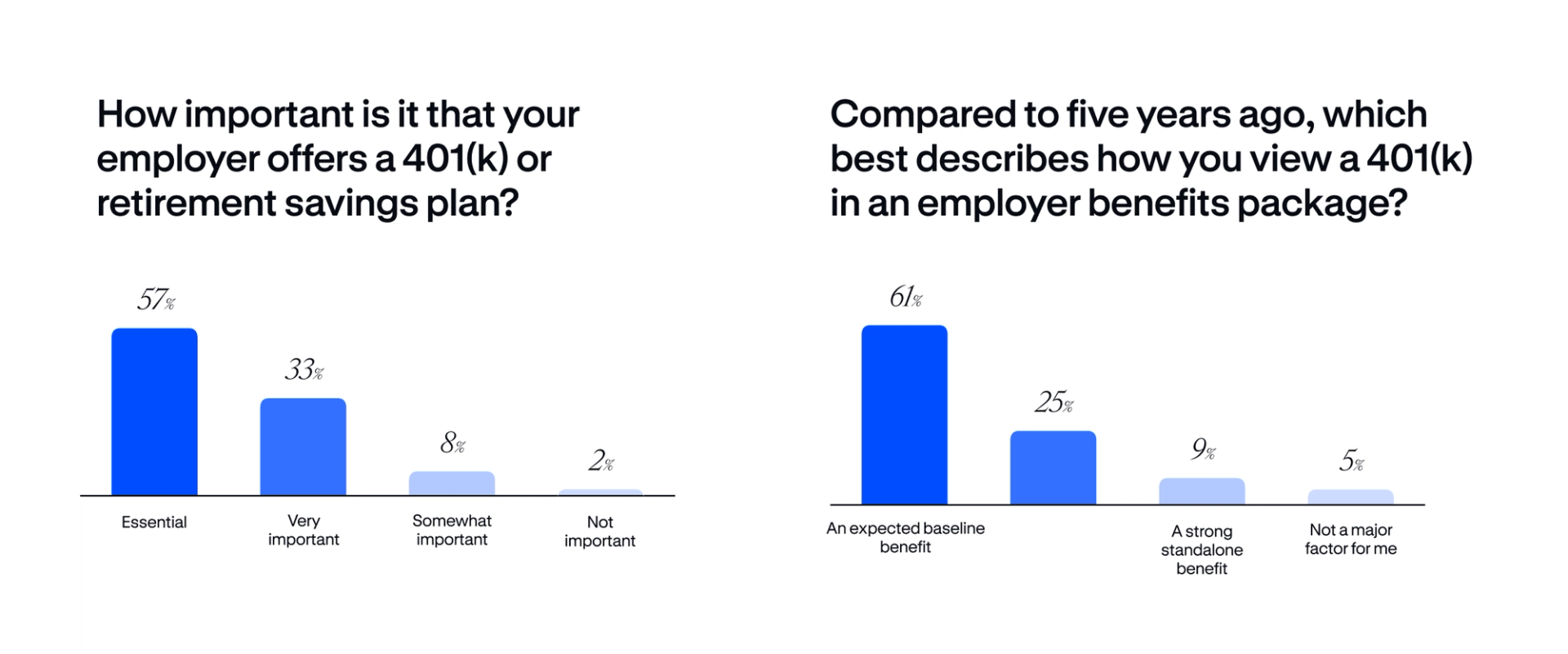
A 401(k) signals to an employee that their employer takes retirement seriously, but it doesn't tell them what to do with the dollars competing for their attention outside it. That's exactly where employees say they're getting stuck.
The Opportunity Employers Are Missing
Together, these findings indicate that employers who can offer more personalization and guidance will be best positioned to get the highest return on their benefits spend. Closing that gap is about making sure the benefits already offered actually reach the people they were built for, before adding new benefits to the stack.
That's the gap Vestwell is built to close, pairing retirement, emergency savings, education, and other financial workplace benefits to provide the kind of guidance employees say they actually want.
Ready to help your employees make the most of your benefits? Launch a comprehensive savings package with Vestwell today.