Vestwell Savings Report: Why Employees Aren't Saving More for Retirement

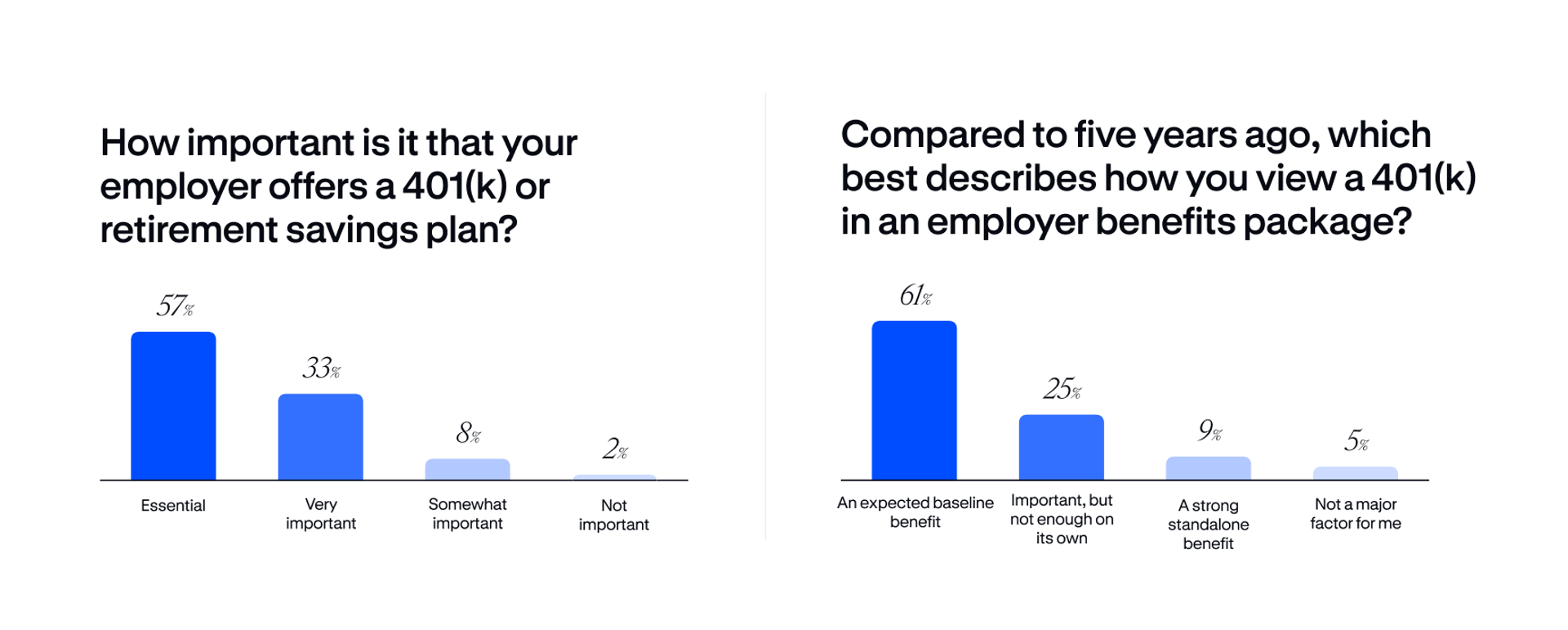
Ask most employees whether retirement savings matter, and they'll say yes. In fact, 90% of workers call a 401(k) essential or very important to their employment. But ask them why they aren't saving more, and the answer has little to do with how they feel about the importance of retirement savings at all.
Vestwell surveyed over 1,000 savers across the United States for our “2026 Saver Survey,” and found that the biggest obstacle to saving more for retirement comes down to the cost of everyday life.
So what's actually standing in the way? We’ve broken down three of the report's key findings: the real barrier to saving, the safety net gap making it worse, and why the 401(k) alone isn't solving the problem.
The Real Barrier Is Cash Flow
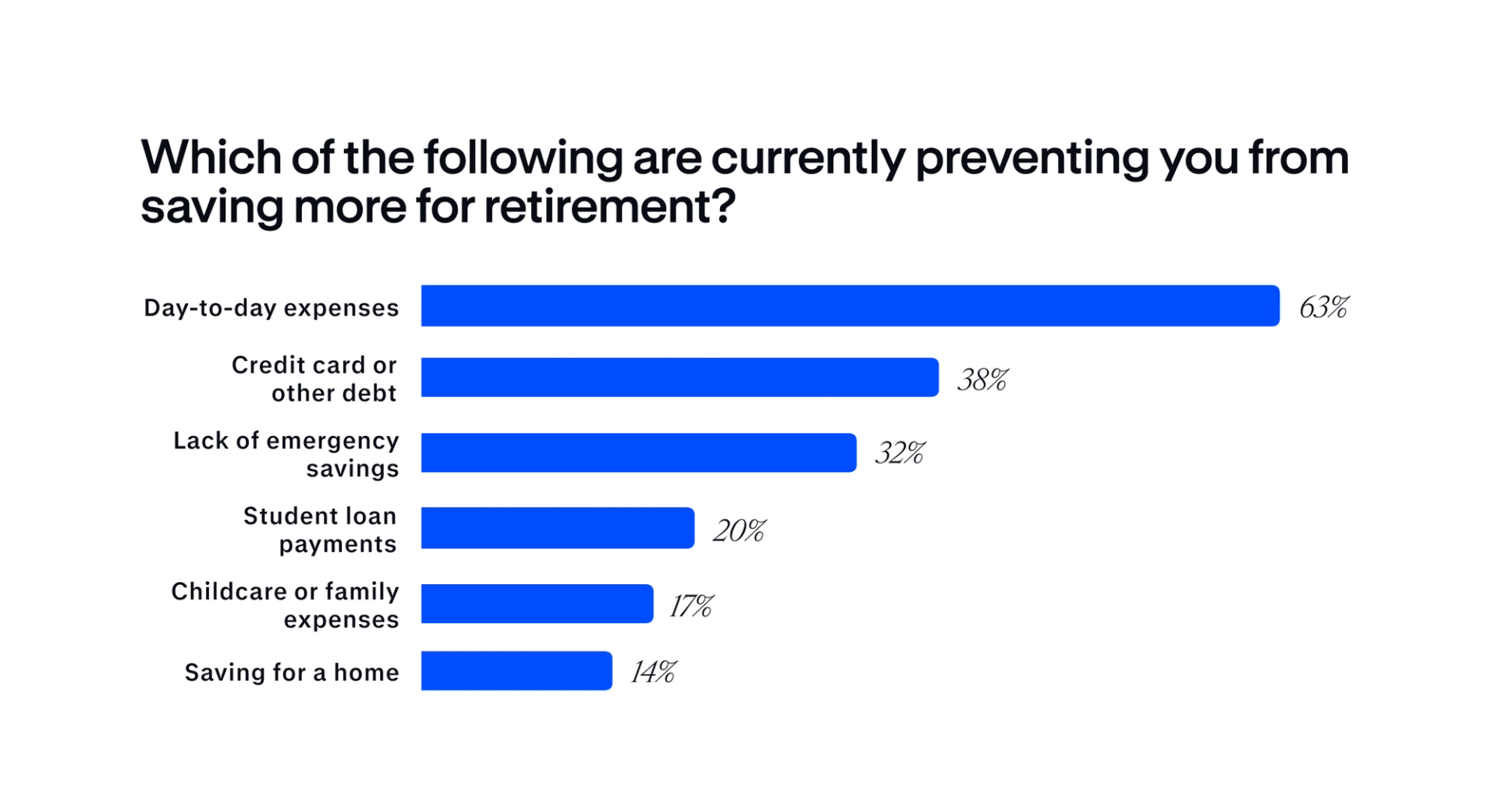
When survey respondents were asked what was standing between them and bigger retirement contributions, day-to-day expenses topped the list by a wide margin. Sixty-three percent of workers cited everyday costs as their number one barrier to saving more, well ahead of credit card or other debt (38%), lack of emergency savings (32%), student loan payments (20%), childcare or family expenses (17%), and saving for a home (14%).
Rising consumer prices have made the tradeoffs harder for nearly everyone. Even among respondents earning between $125,000 and $200,000 a year, more than half still named day-to-day expenses as a barrier to saving.
Based on Bureau of Labor Statistics data, a dollar in 2021 has roughly the same purchasing power as $1.28 in 2026, meaning the typical household is paying close to 28% more for the same items they were just five years ago, including rent, groceries, and gas. As the cost of living has climbed, paycheck dollars available for retirement have shrunk along with it, regardless of income bracket.
A Missing Safety Net Makes It Worse
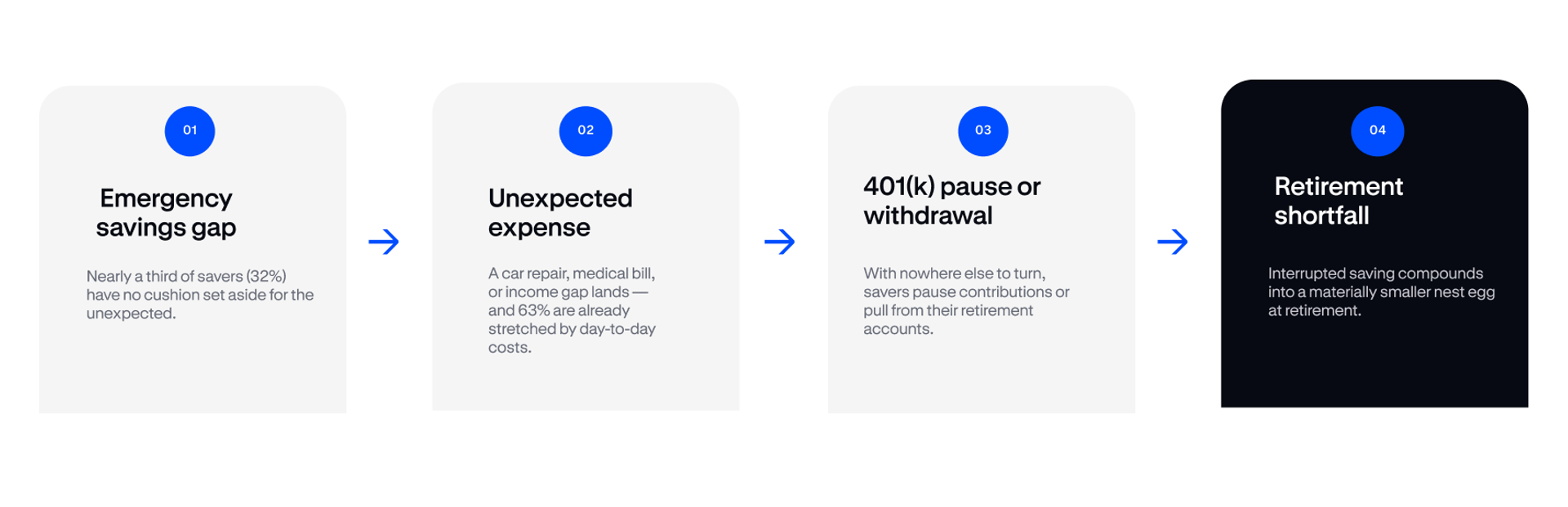
Cash flow pressure is only part of the story. The survey also found a direct link between short-term financial fragility and long-term retirement outcomes. Thirty-two percent of respondents said a lack of emergency savings is preventing them from contributing more to retirement because they can't afford the risk of putting money somewhere it isn't immediately accessible.
Workers without a financial cushion are far more likely to pause or withdraw retirement contributions the moment an unexpected expense hits, whether that's a car repair, a medical bill, or a slow month. One gap in the budget becomes a setback that compounds over the years, contributing to a retirement shortfall.
Employees clearly see this connection, too. When asked what employer-offered benefit would most improve their financial wellness, 37% named an employer-sponsored emergency savings account, second only to HSA/FSA benefits. That demand was strongest among workers in their 40s (44%), but it held up across every age group surveyed.
In fact, emergency savings is now being seen as a gateway to retirement savings. Research from BlackRock and Commonwealth found that workers with some form of emergency savings are 70% more likely to contribute to their retirement plan than those without a rainy day fund. Among low- and moderate-income workers, 64% said they'd save more for retirement if they had emergency savings set aside, and nearly a third said they'd start or increase contributions if their employer let them pair the two together. Across all income levels, opening an emergency savings account led 20% of previously non-saving workers to begin retirement contributions.
The takeaway for employers is that emergency savings shouldn't be treated as a separate, secondary benefit, distinct from retirement savings. Helping employees build even a modest short-term buffer is one of the most effective ways to protect long-term savings.
The 401(k) Is Expected, But It Isn't the Answer on Its Own
Employees have not stopped valuing retirement benefits. 90% of respondents said a 401(k) is essential or very important, and that number held steady across age, income, and employer size, up from 85% in our 2024 survey. A 401(k) has become table stakes: 61% of workers describe it as an expected baseline benefit, not something that sets one employer apart from another, and 25% say it matters but isn't enough on its own.
Not offering a 401(k) is likely to cost an employer candidates. But offering one doesn't answer the actual question employees are wrestling with day-to-day: given everything competing for the same paycheck, where should the next dollar go?
Paycheck Prioritization Is the Real Challenge
Employees know saving for retirement matters, but their paycheck is competing for so many other priorities, including day-to-day expenses, a missing emergency fund, and debt. Retirement contributions are often the first thing to get cut when something else needs the money more urgently.
Employees are asking a simple question: where should my next paycheck dollar go? Right now, most aren't getting an answer from their employer. They're turning to friends, social media, and AI tools instead. Employers closing that gap with connected benefits, personalized guidance, and paycheck-level decision support have a significant opportunity to differentiate.
Ready to help your employees start saving across the full financial spectrum? Launch a comprehensive savings package with Vestwell today.

Help your employees save across the full financial spectrum.
Launch a comprehensive savings package with Vestwell today.